
Boating in Cape Coral, Florida: Your guide to Exploring Southwest Florida by boat
Welcome to your guide to boating in Cape Coral and Southwest Florida! Known as the Waterfront Wonderland, Cape Coral offers miles of scenic canals and access to some of the most beautiful waterways along Florida’s Gulf Coast. Whether you’re planning to cruise the Caloosahatchee River, visit waterfront restaurants, explore Sanibel and Captiva, enjoy a day of fishing, or simply spend time on the water, there’s so much to discover by boat. We’ve put together helpful boating resources, local maps, safety information, fuel locations, and tips to help you make the most of your boating adventure. If you’re staying with Waterside Villas, we’re here to help you enjoy the ultimate Southwest Florida boating vacation!
Do I need a boater safety education card in Florida?
Anyone born on or after Jan. 1, 1988 who operates a vessel powered by 10 horsepower or more must pass an approved boater safety course and be issued with a boating safety education identification card. This ID card must be in his/her possession along with photographic identification.
How do I get a boater education safety card?
There are several online courses that you can take, this way you are ready to boat when to arrive. Here are a couple of options for you:
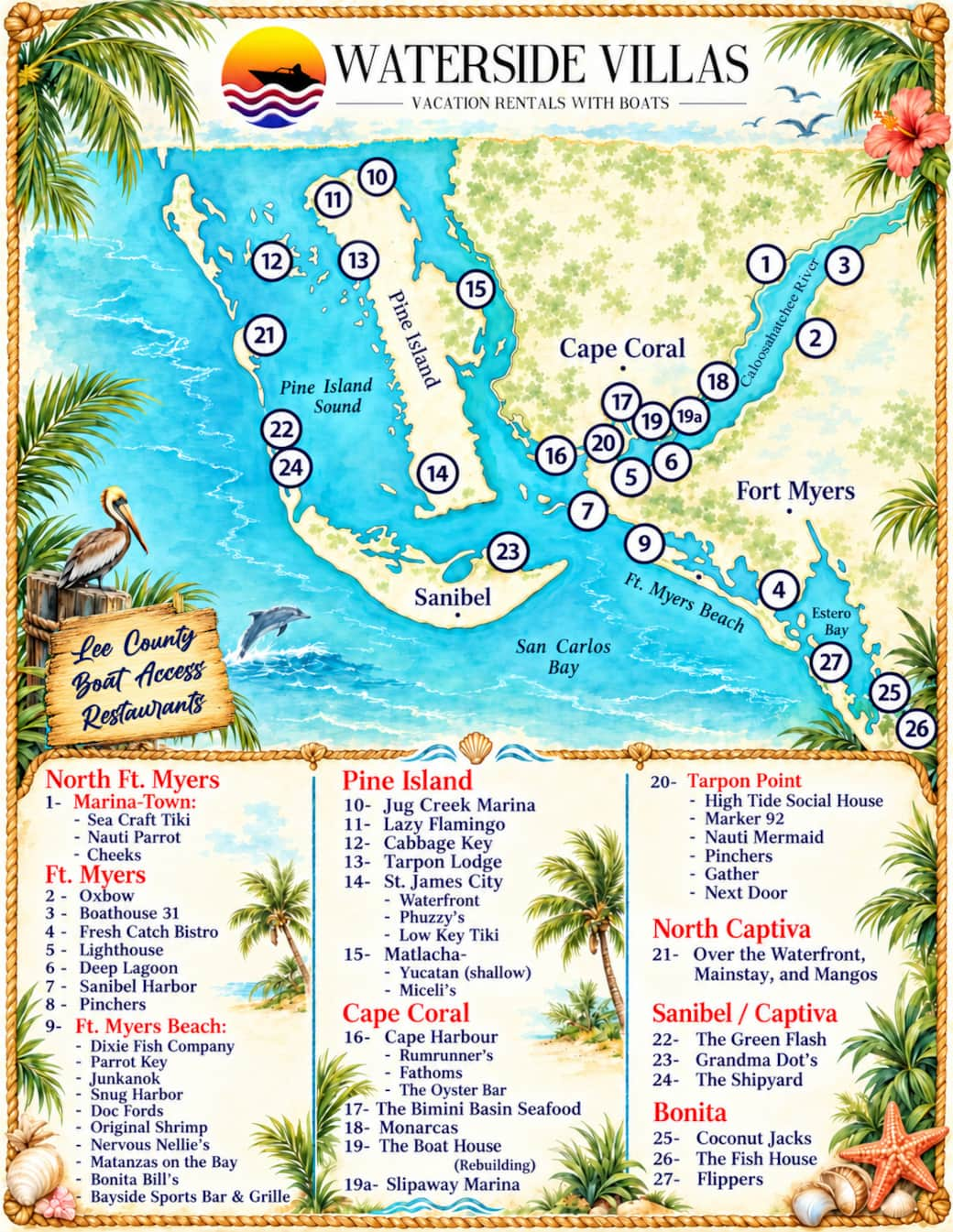
Map of Lee County Boat Access Restaurants
Discover the best of Southwest Florida’s waterfront dining with our curated map of restaurantsalong the water. Whether you’re looking for stunning sunset views, fresh seafood, a casual mealby the marina, or a memorable dining experience overlooking the Gulf, this guide will help you findthe perfect waterfront spot to eat, relax, and enjoy everything Southwest Florida has to offer.
Southwest Florida Boating Resources – Check Tides, Weather & Water Conditions.
🌊 Tides & Marine Weather
☀️ Marine Weather & Boating Conditions
7-Day Marine Forecast
| Day | Max Waves | Wave Direction | Wave Period | Rain Chance |
|---|---|---|---|---|
| Loading forecast... | ||||
7-Day Tide Chart
High & Low Tide Schedule
| Date | Time | Tide | Height |
|---|---|---|---|
| Loading tides... | |||
Cape Coral Bridge Heights & Boating Map
Waterfront Vacation Rentals with Boats, Cape Coral
Boating Safety Tips: Stay Safe on the Water
Whether you're heading out for a relaxing day on the water, fishing with friends, or enjoying a beautiful sunset cruise, safety should always come first. Following a few important precautions can help prevent accidents and ensure everyone has an enjoyable time on the water.
1. Always Wear a Life Jacket
Wearing a properly fitted life jacket is one of the most important steps you can take to protect yourself while boating. Drowning is a leading cause of boating-related fatalities, and many of these tragedies can be prevented by wearing a life jacket. Make sure everyone on board has access to a properly fitting life jacket and wears it throughout the trip.
2. Stay Alert and Aware of Your Surroundings
Keep your eyes on the water and pay attention to what's happening around you. Other boats, swimmers, obstacles, changing water conditions, and unexpected hazards can create dangerous situations. Maintain a constant lookout in every direction and avoid distractions while operating your vessel.
3. Never Boat Under the Influence
Alcohol and boating are a dangerous combination. Operating a boat while under the influence of alcohol or drugs puts everyone on board and others on the water at risk. If you're planning to enjoy alcoholic beverages, wait until you're safely back on shore. Always designate a sober operator for your trip.
4. Take a Boating Safety Course
Knowledge and preparation can make all the difference on the water. A boating safety course teaches important skills, navigation rules, emergency procedures, and responsible boating practices. Whether you're a first-time boater or have years of experience, continuing your boating education is always a smart decision.
5. Inspect Your Safety Equipment Before Leaving
Before every trip, make sure your vessel is equipped with the required safety gear and that everything is in good working condition. Essential equipment may include life jackets, a sound-producing device such as a whistle or horn, navigation lights, a fire extinguisher, and emergency signaling devices. Consider carrying an emergency position-indicating radio beacon (EPIRB) or personal locator beacon (PLB) for added protection.
6. Always Leave a Float Plan
Before heading out, let someone on shore know your boating plans. Share where you're going, who is on board, your expected return time, and what to do if you don't return as scheduled. Having a float plan can help emergency responders locate you more quickly if something goes wrong.
7. Know the Local Waterways and Speed Zones
Take time to familiarize yourself with the waterways you'll be traveling. Pay attention to posted speed limits, idle-speed zones, no-wake areas, and navigation markers. Always operate your vessel at a safe speed based on water conditions, visibility, traffic, and surrounding hazards.
8. Check the Weather Before You Go
Weather conditions can change quickly, especially on open water. Check the marine forecast before departing and continue monitoring conditions throughout your trip. Be aware of approaching storms, strong winds, lightning, and rough seas. If conditions become unsafe, head back to shore.
9. Use an Engine Cut-Off Switch
An engine cut-off switch is an important safety feature that can help prevent serious injuries if the boat operator falls overboard or is thrown from the helm. When operating your vessel, properly attach and wear the engine cut-off switch lanyard or use an approved wireless device.
10. If Your Boat Capsizes, Stay With It
If your boat capsizes or you find yourself stranded in the water, do your best to remain with the vessel. Even a partially submerged boat is generally easier for rescuers to spot than a person in the water. Staying with your boat can make a significant difference in helping rescuers find you.
Make Boating Safety a Priority
A little preparation goes a long way toward making every boating trip safer and more enjoyable. By following these simple safety practices, staying alert, and being prepared for unexpected situations, you can help protect yourself, your passengers, and others sharing the waterways.
Boat smart, stay prepared, and enjoy your time on the water!